Society is defined by the gathering of a number of humanity with different loyalties and beliefs in a specific environment or a country and refers to a group of people who live together in an organized form and within an organized group under rule.
Somali society is considered one society due to the studies that were conducted previously on researching about Somali identity. After a social study on Somali behavior, it was found that the personality traits in human behavior are equal in the Somali character from the far country to the far end. It is a tribal groupings that have allied themselves to common interests in solution and nomadism, so some of previous researchers said that the Somalis are pastoral community only and this is not true, but there are different groups owners of trades and professions which are fluent in agriculture, fishing, trade and blacksmithing, in which the character of human civilization prevails in coexistence and acceptance of the other, and their roles are distributed in hosting displacement from herders in the dry season, but in the latter the shepherds’ character overcame other natures of other groups until they were toppled and issued towards leadership and moving the reins and alone The Shepherds of Governance.
Historical background to tribal quotas 4.5:
Somali independent political history dates back after 1960. After the independence of the Somali north on June 26 from the British colonial and the independence of the south from the Italian colonial on July 01 in the same year, when the Somali Republic was born and united northern and southern sides by electing Adam Abdullah as the first president of Somalia, and that stage witnessed a gentle development towards democracy in fair political elections Until more than 100 political parties were formed, then the number decreased to less, so that the competition would be political, not tribal.
These parties were parties that wore the mantle of patriotism, but were dressed in a tribal shirt, especially those tribes floating on it the drought natures of pastoralists and nomads, and the country did not witness any political activities other than some little kingdoms in the form of sultans and princes controlling ancient cities, especially coastal cities such as Mogadishu, Marka, Zayla’ And Bossaso whose people are characterized by peace, harmony and acceptance of the other.
Somalia did not witness fair elections in its history, which were shattered as a calming and quieting for any tribal conflict that is rooted in Somali society, especially pastoralists among them, and for the first electoral system in Somalia, it was in 1956 with a tribal flavor and political positions and departments were distributed with an unfair distribution and it is noticed in the election distribution table social injustice where Mogadishu recorded 14,252 votes in one seat, while the people of Burhakabah registered 3,204 votes in five seats, and the reason is purely political, which is the exclusion of the elite group from politics, because the people of Burhakaba are an agricultural society and socially peaceful.
Later, political field in Somalia witnessed political tensions with purely tribal foundations, worn with political ideologies, in suppressing the unarmed groups that prevail in them the nature of peace and psychological calm until democracy was overthrown by a military coup led by General Mohamed Siad Barre – may Allah have mercy on him – and after that local and regional political changes occurred, Somalia became a political leader which plays an important role in the regional and geo-strategic policies in the Horn of Africa and Africa in general after the Communist approach approached and exported to Somalia, which They turned the national vision that the late regime sought to narrow tribal interests until other tribes erupted and allied with the Ethiopian state – the archenemy of Somalia at that time – to topple the regime and was overthrown in 1991 and entered the country in the furnace of war conflicts that continue to this day.
The armed opposition fronts were of the four main tribes that have political quotas so far:
The SNM Front of the Is-haq – Somaliland Tribe is currently.
The SSDF front of the Majerten – Puntland tribe is currently.
The USC Front of the Hawiye – tribe in southern and central Somalia.
SDM front of the Rahawein tribe in southwestern Somalia.
And finally, these fronts divided into factions fighting among themselves until they entered the country to a difficult stage that a political settlement cannot be reached, and each faction has ruled their villages and areas with the mouth of bullets.
Those waves in which the desert character prevailed, all the unarmed tribes in which human phenomena prevail survived and chose to stay in managing their lives with the professions and handicrafts they possess, and some of them chose to flee abroad to seek refuge and this group of society became immune from conflicts until the world witnessed them and they are quite a number, but the armed group overcame it after running the jungle law on the Somali scene.
After this difficult stage continues, the international community realized the danger of Somali social disintegration and then, the United Nations held several political rounds in holding reconciliation conferences between the Somalis to get the homeland out of the impasse, but all these efforts were failing until the end of the policy approach that brings together all Somali clans to ensure that each clan participate In politics and what is today called tribal quotas 4.5.
Where did this relativity come from?
The four tribes are among the armed tribes that fought long wars in the dismantling of Somali society with the barrel of bullets, and they led all the armed fronts, while the rest is the large group that represents the spring in the Somali heart of professionals and craftsmen, as well as preachers, scholars, owners of sultans and civilization, and most of them are unarmed civilians, not Bedouins Armed traveler who prevail in the character of dying, this group has become marginalized in political participation after being removed from the proximity of political activities and appointed to positions despite the efforts made by some governments in the political settlement between the tribes.
Relativity came on the basis of the strongest in arms, not political and scientific competence, as well as the professional or more numerous, and it is what made Somalia formulate a law that does not differ from the law of the jungle.
Somalia ensures political participation in Parliament by all Somali clans in distribution as 4.5:
The Hawiye Tribe: 61
The Darod Tribe: 61
Tribal of Dirr Tribe: 61
The Digil Mirifle Tribe: 61
Somali Minority Tribes Community: 31
(Tribal quotas for members of Parliament)
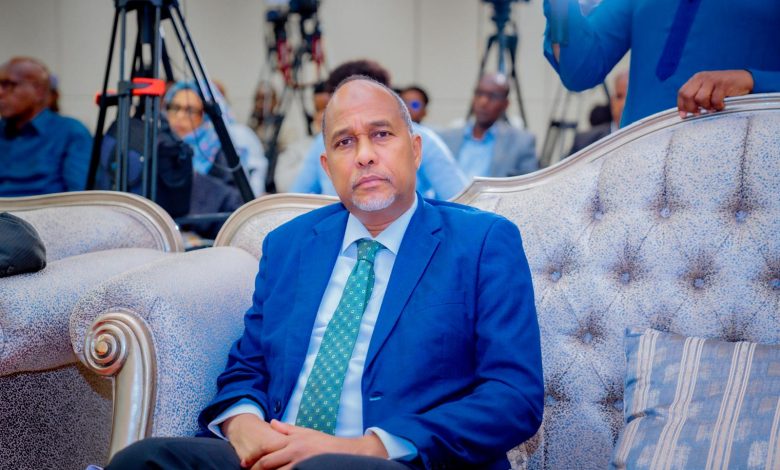
The Personality of the Chairman of the Somali Welfare Party:
Mahmoud Mohamed Mahmoud Jema’le is a socio-political figure and a former adviser to the office of the former Somali Prime Minister. He has social fingerprints for the Somali community in Britain. He is a member of the Somali Minority Tribes Community in Somalia, including those who brought Islam to Somalia centuries ago and has cultural imprints in containing the diaspora of Somali Community in Britain with wisdom and statesmanship without resorting to violence.
The Somali minority clans are among the groups with an ethical reputation for social behavior based on peace and harmony in rejecting violence and achieving equality between citizens, as it served as the judiciary and the destiny from time immemorial to prosecute the litigants and the realization of the right to those who deserve it.
Somalia towards political democracy and start of a policy that equals all Somali tribes without separating and standing with marginalized groups and Somalia does not need the authoritarian tribal shirts that some armed tribes pursue in taking power and the Somali reality differs from its predecessor and this political change has become necessary in directing Somali policy towards urbanization and modernity with modern democratic foundations in starting strategic policy with a national ideological background that does not separate but combines.
The Chairman of the Somali Welfare Party, the presidential candidate in 2021, hopes for the birth of a new spring for Somali politics, with elections held for the first time in Somalia in the free box (elections) and by a majority of the votes of the Somali people. This calls for the international community and countries influencing the Somali political arena to stand with those marginalized groups during the past decades, which in turn will take Somalia a step towards stability and development after the failure of all political initiatives that stood with the deserving groups of the Somali authority during successive periods, and therefore we hope your support in the success of this historic mission.
Best Regards
Mahmoud Mohamed Mahmoud Jema’le
Chairman of Somali Welfare Party
Contacts:
Tell: +447495455923 / +254796871394 / +252617961239 / +97430850159
Email: somaliwelfareparty@gmail.com